
Commercial Demolition Contractors Warrington, Cheshire
Group Services North West provides commercial and industrial demolition support across Warrington, including selective demolition, redundant structure removal, building alterations and site clearance for redevelopment. Our approach is tailored to the requirements of commercial premises, industrial estates, warehouses and active business locations.
Commercial and Industrial Demolition Contractors in Warrington
Commercial demolition in Warrington often involves practical challenges associated with industrial property, logistics facilities, warehouses and operating businesses. Buildings may need to be altered, redundant structures may require removal, or an existing site may need to be cleared to make way for new construction.
Group Services North West supports suitable commercial demolition projects for property owners, developers, industrial operators, managing agents and contractors across Warrington and nearby areas. Projects may involve selective structural demolition, removal of outdated building sections, pre-development demolition or associated site clearance.
Every commercial demolition project needs an approach based on the actual structure, access conditions and proposed scope. Industrial sites can contain a mix of old and new building elements, internal installations, equipment, services and occupied operational spaces. These need to be understood before demolition activity begins.
Our focus is on commercial and larger-scale opportunities rather than small general rubbish collections or routine domestic clearance. This supports projects where technical planning, safety, scheduling and coordinated handover are important.
What Does Industrial Demolition Include?
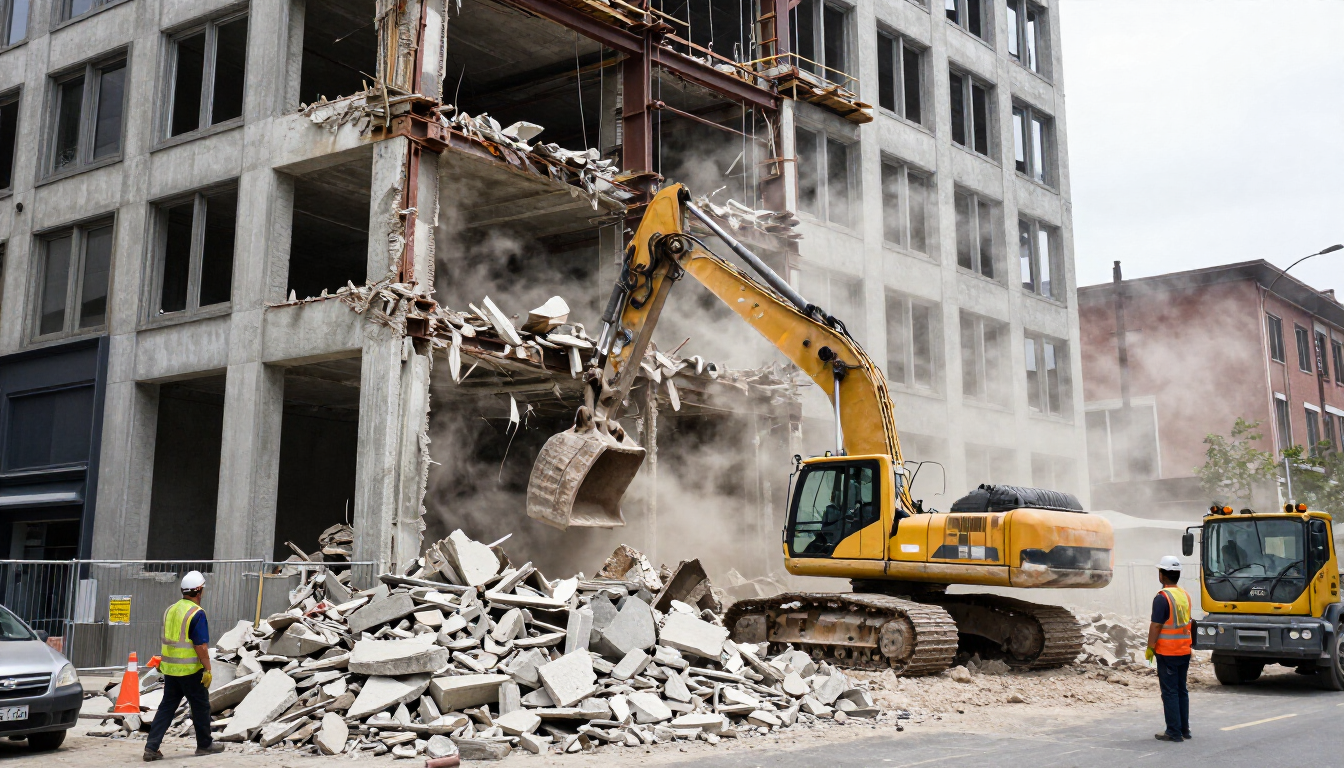
Industrial demolition involves the planned dismantling, partial removal or complete removal of structures associated with warehouses, factories, industrial units, logistics premises and other commercial facilities.
Work may involve the removal of redundant extensions, selected structural elements, obsolete building sections or complete suitable structures before redevelopment. It can also include demolition-related clearance and preparation for subsequent construction.
The correct method depends on structural information, site operations, machinery access, nearby buildings, services and any features that must remain in place.
Demolition Services for Warrington Businesses
Industrial Building Demolition
Planned removal of suitable redundant industrial structures and building sections as part of site redevelopment or operational changes.
Warehouse Demolition
Demolition-related works for warehouse buildings, obsolete extensions and commercial premises being replaced or significantly altered.
Selective Structural Removal
Targeted dismantling of specified structural components where the remainder of the building must stay intact and stable.
Commercial Building Alterations
Demolition preparation for new layouts, extensions, building changes and approved redevelopment schemes.
Site Clearance
Removal of agreed demolition materials and preparation for future groundworks, construction or commercial site improvements.
Redevelopment Enabling Works
Coordinating demolition requirements with other construction activities needed to prepare commercial land or buildings for the next phase.
Demolition for Warehouses and Industrial Units
Warehouse and industrial properties often evolve as the business occupying them changes. Extensions are added, operational layouts are altered and structures are adapted to accommodate different equipment or activities. Eventually, parts of the property may become unsuitable for their intended use.
Demolition can form part of a programme to remove redundant structures, make way for an extension, replace obsolete facilities or support redevelopment. The work should be planned with an understanding of the site's operational requirements and the structures that will remain in place.
Redundant Building Sections
Existing extensions, structural elements and outdated areas may require selective demolition. The relationship between the area being removed and the remaining building must be carefully assessed.
Industrial Site Redevelopment
Where a business or developer intends to replace an existing structure, demolition may be required before site preparation, foundations and new construction begin.
Building Reconfiguration
Major changes to a commercial building can involve structural removal as well as non-structural strip-out. These operations need separate technical consideration.
Commercial Property Handover
Landlords and property owners may require agreed demolition or reinstatement-related works before a site can be redeveloped or made ready for a different occupier.
Planning Demolition on Active Industrial Sites
One of the main considerations for industrial demolition is whether other activities will continue on the site. Warehouses and logistics facilities may have regular deliveries, heavy goods vehicles, staff movements, plant equipment and operational areas that cannot simply be closed without planning.
Demolition works need suitable segregation from these activities. Access for contractors, waste vehicles and machinery must be considered alongside pedestrian routes, delivery points and emergency arrangements. Where the proposed demolition affects services or other essential infrastructure, safe isolation and coordination become particularly important.
In some circumstances, phased work may allow part of a larger premises to remain operational. However, the feasibility depends on structural safety, the location of demolition activity and the impact on surrounding operations. No assumption should be made that a business can remain open throughout demolition without a proper assessment.
Demolition Projects Around Warrington's Business Areas
| Location | Commercial Character | Relevant Demolition Considerations |
|---|---|---|
| Birchwood | Business parks, offices and commercial premises. | Occupied neighbouring units, managed sites and coordinated access. |
| Woolston | Industrial premises and commercial activity. | Industrial access, plant movements and retained operational areas. |
| Gemini and Winwick | Large commercial, warehousing and retail-related sites. | Vehicle routes, loading zones and safe separation from site users. |
| Warrington Town Centre | Offices, shops and established commercial buildings. | Constrained access, neighbouring premises and public safety. |
| Wider Warrington | Mixed commercial and industrial properties. | Site-specific structural, environmental and operational requirements. |
Structural Demolition Versus Commercial Soft Strip Out
Demolition and soft strip out are related but different construction activities. Structural demolition focuses on removing or altering a structure, while soft strip out prepares a building internally by removing non-structural fixtures and finishes.
Structural and Selective Demolition
May involve load-bearing elements, major building components, redundant structural extensions or complete buildings. Suitable engineering information, sequencing and temporary support may be required.
Commercial Soft Strip Out
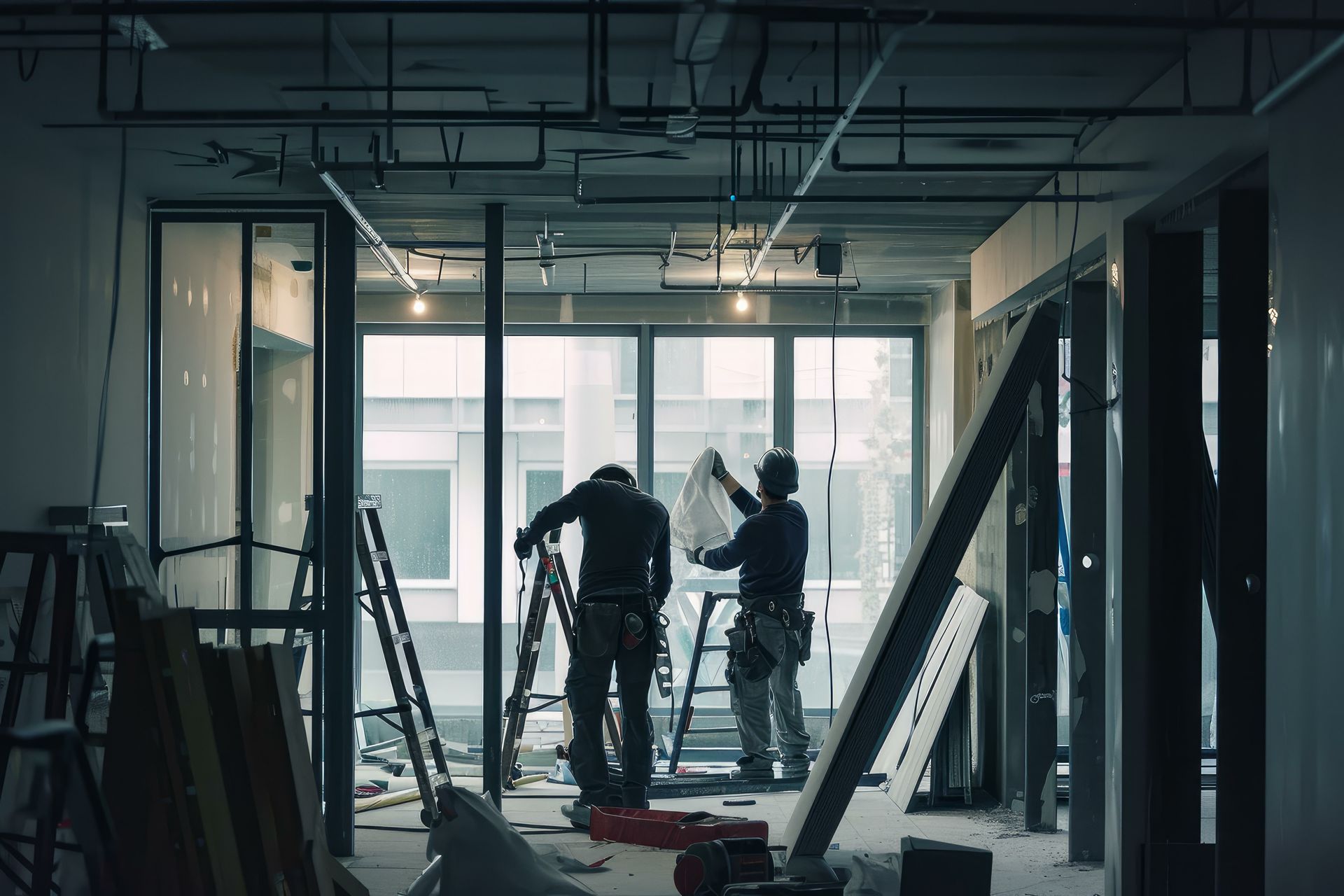
Typically involves removing office pods, partitions, flooring, suspended ceilings, fixtures, fittings, redundant furniture and similar non-structural elements before refurbishment or handover.
See our Commercial Soft Strip Out Warrington page for interior clearance enquiries.
Safety and Compliance on Commercial Demolition Sites
Demolition work involves significant risks, particularly where structural stability, heavy machinery and occupied areas are concerned. The demolition method must be selected and planned by competent people with suitable consideration of the building's construction, condition and surrounding environment.
Important project information may include structural surveys, service records, asbestos surveys, the position of underground infrastructure, access arrangements and details of adjoining property. These help identify risks that must be addressed before physical work begins.
Where asbestos-containing materials may be disturbed, appropriate assessment and the required specialist arrangements are essential. Higher-risk asbestos work must be undertaken by suitably licensed contractors. Structural removal must also be planned with consideration of any temporary support or other engineering requirements.
Demolition notice and planning requirements should be checked for the specific site. These requirements may differ depending on the type of structure, proposed works and relevant local restrictions.
How We Approach Warrington Commercial Demolition
Understand the building, required removal and intended redevelopment or alteration.
Review structure, services, access, operations and relevant survey requirements.
Establish appropriate controls, responsibilities, sequence and required approvals.
Carry out the agreed programme with suitable supervision and site segregation.
Manage debris and prepare the site for further construction or handover.
Waste Management and Site Preparation After Demolition
Commercial demolition can produce mixed materials, including brick, concrete, metals, timber, roofing materials and remnants of earlier building alterations. The amount and type of material depend on the structure and the agreed demolition scope.
Waste management should be considered when planning the work rather than treated as an afterthought. Material segregation, appropriate disposal arrangements, safe loading and vehicle movements all affect site safety and the demolition programme.
Where the site will be reused, the client should specify what is to remain after demolition. For example, a new commercial building may require different ground preparation from a project where an existing slab is being retained. Clear handover requirements help connect the demolition work to the next stage of the construction programme.
What Affects the Cost of Industrial Demolition?
Structure and Materials
Building size, height, construction materials, structural condition and the extent of the removal all influence cost.
Operational Restrictions
Active warehouses, industrial premises and sites with restricted working areas may require additional planning and segregation.
Plant and Access
Machinery needs, loading routes, vehicle movements and safe working space can affect the programme and resources required.
Surveys and Waste Handling
Technical assessments, specialist requirements, debris volumes and final clearance specifications affect overall pricing.
The most useful way to assess demolition cost is through an agreed project scope supported by appropriate site and structural information.
Commercial Demolition Coverage in Warrington
GSNW can consider suitable commercial demolition projects across Warrington, including Birchwood, Woolston, Padgate, Latchford, Gemini, Winwick, Stockton Heath and surrounding commercial areas.
We prioritise suitable commercial, industrial and redevelopment opportunities where the scope and scale support a properly planned demolition programme.
Related Commercial Property Services
Commercial Soft Strip Out Warrington — internal removal before refurbishment or demolition.
Commercial Refurbishment Services — upgrading and adapting business premises.
Dilapidation Services — commercial lease-end reinstatement and property works.
Commercial Refurbishment Checklist — planning considerations before property improvement projects.
Frequently Asked Questions
What is involved in industrial building demolition?
Industrial building demolition involves the planned removal or dismantling of a building or specified structural sections. The process may include pre-demolition surveys, isolation of services, preparation of the work area, controlled structural removal, debris handling and final site clearance.
Industrial properties can be complicated because they may have been extended, altered or adapted many times. Warehouses, factories and commercial units may contain retained equipment, internal structures, adjoining extensions and services that need to be protected or safely isolated. The demolition approach should be based on the actual construction and current condition of the premises.
Where the site remains partly operational, additional controls may be needed around vehicle movements, staff access and neighbouring activities. Structural assessments, demolition sequencing, supervision and any required temporary works are important considerations. Clients should provide relevant drawings, surveys and operational requirements so that an appropriate scope and programme can be developed before the work begins.
Can demolition be carried out while a warehouse remains operational?
Some demolition projects can take place on sites where other areas remain operational, but this depends on the building, the scope of removal and the risks involved. Maintaining warehouse operations during demolition must never be assumed to be safe without a suitable site-specific assessment.
Industrial and logistics premises often depend on constant vehicle access, deliveries, loading facilities and staff movement. Demolition can affect these activities through noise, dust, debris, vibration or restricted access. The project team must consider how demolition zones will be segregated, whether essential services will be affected and how emergency routes can be maintained.
In certain circumstances, phasing or temporary operational changes may be possible. In others, parts of the building or site may need to close during particular activities. The demolition method and structural risk assessment should determine what is feasible. Early coordination with the business helps identify operational priorities and allows the project to be planned around realistic safety requirements.
What is selective demolition in a commercial building?
Selective demolition is the planned removal of specific building components or sections while retaining other parts of the property. It is commonly considered when a commercial building is being altered, extended, reconfigured or prepared for a different use.
For example, an industrial premises may contain a redundant extension or building section that needs removing while the main facility remains. In such circumstances, it is important to understand how the existing components are connected and how removal may affect the retained structure. Structural advice and temporary support may be required before the demolition can proceed.
Selective demolition is different from non-structural soft strip out. Removing partitions, flooring and fittings does not necessarily involve altering the structural building frame, whereas selective demolition may affect load-bearing components. A clear scope, suitable drawings and competent technical assessment are therefore essential. Clients should not assume that targeted removal is automatically simpler or less demanding than full demolition.
How much does commercial demolition cost in Warrington?
Commercial demolition cost depends on the specific building, required demolition method, structural complexity, access, surveys, disposal arrangements and final handover condition. There is no reliable fixed rate suitable for every commercial or industrial project.
A detached redundant structure with straightforward machinery access may require a different approach from selective demolition beside an operational warehouse. Industrial sites may also contain heavy structural elements, specialist building materials, redundant services or confined areas that change the work involved.
A project quotation should explain what is included, particularly around surveys, preparatory activity, demolition, waste removal and final site clearance. Clients should supply photographs, plans and relevant building information where available. The more clearly the scope is defined, the easier it becomes to compare quotations and understand the resources required to complete the project safely.
Do industrial demolition projects require asbestos surveys?
Appropriate asbestos information is essential before demolition work that may disturb existing building materials. A refurbishment or demolition asbestos survey is generally required to identify asbestos-containing materials in areas affected by the proposed works, particularly in older industrial and commercial buildings.
Warehouses and commercial units can contain asbestos within roofing, insulation, boards, coatings or previous building alterations. The absence of visible asbestos does not establish that a property is free from it. Survey information should be reviewed before demolition planning is finalised, and any identified materials must be managed through the appropriate legal and specialist procedures.
Higher-risk asbestos work requires an HSE-licensed contractor. The existence of an ordinary demolition contractor does not remove this requirement. Clients should arrange the necessary information and ensure that the relevant parties understand it before any potentially disturbing work takes place. This helps protect workers and other people on the site and avoids unexpected disruption during the project.
What happens after an industrial building has been demolished?
After demolition, the remaining work depends on the scope agreed with the client. It may include debris clearance, waste segregation, removal of specified building remnants and preparation for the next construction stage. The final condition of the site should be established before demolition begins.
Some projects require a cleared site ready for groundworks, while others retain foundations, slabs, boundary structures or parts of the existing building. Where redevelopment follows, the demolition and groundworks teams should understand what remains and whether any further investigation, excavation or site preparation will be required.
Industrial sites can also contain buried structures and service routes that are not immediately visible. These should be considered in the redevelopment plan rather than assumed to have been removed during demolition. A clear handover between project stages supports better coordination and helps the client move towards construction, refurbishment or reuse of the commercial site.
Discuss Your Warrington Commercial Demolition Project
Whether you are planning an industrial redevelopment, removal of a redundant building or selective demolition on a commercial site, contact Group Services North West with details of the premises and proposed works.
Get Quote