


Sustainable Office Fit Outs in the North West: The Complete Guide to EPC Ratings, Net Zero & ROI
Sustainability in the built environment is no longer just a "nice-to-have" marketing slogan or a box-ticking exercise for corporate social responsibility (CSR). For businesses in Liverpool, Manchester, and across the UK, it has become a critical commercial strategy driven by three powerful forces: surging energy costs, strict government legislation (MEES), and the demand for higher-quality workspaces.
At Group Services Northwest, we believe that a sustainable fit out is not merely about saving the planet—it is about future-proofing your asset against obsolescence. Whether you are a landlord needing to lease a building or a tenant wanting to reduce overheads, this guide explores the tangible, financial, and environmental benefits of "going green" with your next refurbishment.
What Defines a Truly "Sustainable" Fit Out?
A common misconception is that a sustainable office just needs a few recycling bins and LED lights. A true sustainable fit out, however, looks at the entire lifecycle of the project. It is built on three core pillars that we integrate into every design:
1. Energy Efficiency (Operational Carbon)
This refers to the carbon emitted during the day-to-day running of the office. According to The Carbon Trust, effective energy management can deliver substantial cost savings. A high-performance fit out reduces this through:
- Smart HVAC Systems: Replacing outdated gas boilers with Variable Refrigerant Flow (VRF) air conditioning or heat pumps that use electricity more efficiently.
- IoT Sensors: Installing occupancy sensors that automatically dim lights or lower heating in meeting rooms when they are empty.
- Thermal Performance: Upgrading insulation in roof voids and secondary glazing to prevent heat loss, which is particularly vital in the North West’s older Victorian commercial stock.
2. Embodied Carbon (The "Hidden" Cost)
Embodied carbon is the total greenhouse gas emissions generated to produce the built environment. This includes the extraction, manufacture, transportation, and assembly of materials. The UK Green Building Council (UKGBC) emphasises that reducing embodied carbon is as critical as reducing operational energy to achieve Net Zero.
- Low-Carbon Materials: We specify products with lower footprints, such as carpets made from recycled fishing nets or timber certified by the FSC (Forest Stewardship Council).
- Local Supply Chains: By sourcing materials from manufacturers within Lancashire, Cheshire, and Merseyside, we drastically reduce the "food miles" of your construction project.
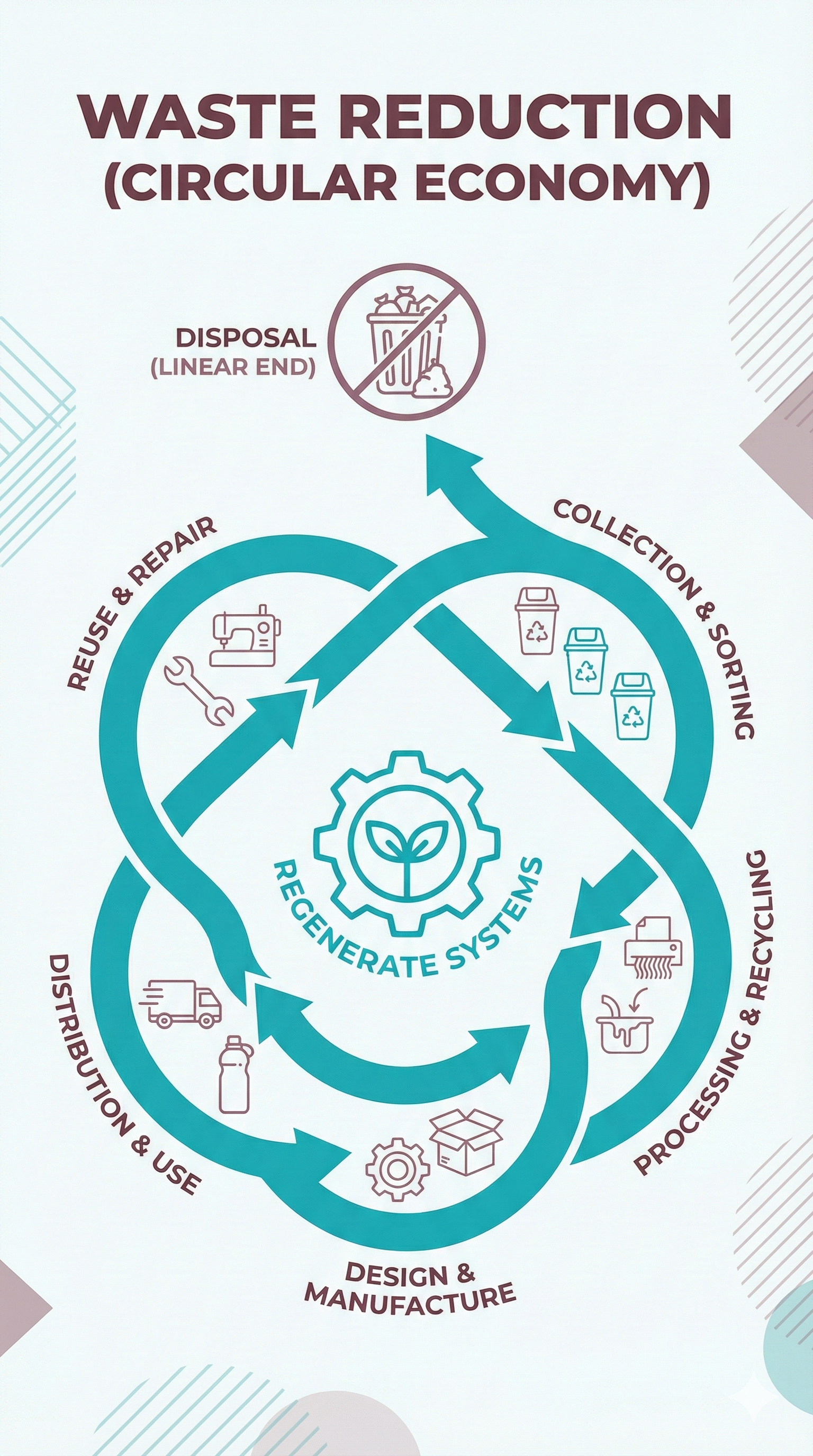
3. Waste Reduction (Circular Economy)
The construction industry is a major contributor to landfill. We combat this through a
Site Waste Management Plan (SWMP), a practice strongly advocated by
WRAP (Waste and Resources Action Programme). We aim for a "Zero to Landfill" status, where strip-out debris is segregated on-site into wood, metal, gypsum, and glass, ensuring it is recycled or used for energy-from-waste rather than buried.
Understanding MEES and Your Commercial EPC Rating
The legislative landscape for commercial property has shifted dramatically. Under the Minimum Energy Efficiency Standards (MEES), the government is tightening the screws on inefficient buildings.
- Current Status (2025): It is unlawful to let a commercial property with an Energy Performance Certificate (EPC) rating of F or G.
- The 2027 Target: The proposed legislation aims to raise the minimum standard to a C rating.
- The 2030 Target: According to current government guidance on MEES regulations, the long-term goal is for all commercial rented buildings to achieve a 'B' rating by 2030..
The Risk of the "Stranded Asset"
For landlords, failing to upgrade means you may legally be unable to rent your property, turning it into a "stranded asset" with zero income potential. For tenants, a low EPC rating often signals a poorly insulated building that will haemorrhage money through high heating bills. Refurbishment is the most effective intervention point to leapfrog these ratings, taking a building from a 'D' to a 'B' in a single project cycle.
Reducing Embodied Carbon: The "Reuse First" Strategy
The most sustainable material is the one that already exists. Before we order a single skip or new sheet of plasterboard, Group Services Northwest conducts a Pre-Refurbishment Audit.
This "Reuse First" strategy involves:
- Cat A Retention: Can the existing raised access flooring be professionally cleaned and retained? Can the ceiling grid remain, with only the tiles being replaced?
- Furniture Upcycling: Rather than buying 50 new desks, can the steel frames of the existing ones be kept and fitted with new, sustainable timber tops?
- Glazed Partitioning: Glass is high in embodied carbon. We carefully dismantle existing glass meeting rooms and reconfigure them to suit the new layout, saving tonnes of carbon and thousands of pounds.
The Financial Reality: Do Green Fit Outs Cost More?
There is a persistent myth that sustainable fit outs are prohibitively expensive. While the upfront Capital Expenditure (CapEx) can be 5–10% higher due to premium materials or advanced Building Management Systems (BMS), the Operational Expenditure (OpEx) savings deliver a rapid return on investment.
ROI Comparison: Traditional vs. Sustainable Fit Out
| Feature | Traditional Fit Out | Sustainable Fit Out | Long-Term Impact |
|---|---|---|---|
| Initial Material Cost | Standard | +5% to 10% | Higher upfront but higher durability. |
| Energy Bills | Market Rate | -20% to -40% | Significant monthly cash flow savings. |
| Maintenance | Reactive | Predictive | Smart sensors alert you to faults before failure. |
| Asset Value | Depreciates | "Green Premium" | Green buildings attract higher rents and valuation. |
| Tax Incentives | Standard | Super-Deduction | Potential to claim capital allowances on green plant machinery. |
Biophilic Design: The ROI of Employee Wellbeing
Sustainability extends beyond carbon; it includes the human element. Biophilic Design is the practice of connecting people with nature within the built environment. In a post-pandemic world, this is a key driver for getting staff back into the office.
Research suggests that offices with high environmental quality can boost productivity by 8% to 11%. We achieve this by:
- Improving Air Quality: Using low-VOC (Volatile Organic Compound) paints and carpets to prevent "Sick Building Syndrome."
- Visual Connections: Installing living walls (real plants) or preserved moss walls which dampen acoustics and reduce stress.
- Circadian Lighting: Installing LED systems that change colour temperature throughout the day—cool blue in the morning for focus, warm yellow in the afternoon for relaxation—to mimic natural sunlight.
Our 4-Step Green Audit Workflow
If you are planning a refurbishment in the North West, here is the roadmap we use to ensure compliance and sustainability:
- The Energy Baseline: We review your current energy bills and valid EPC rating to establish a starting point.
- The Material Scan: We conduct a walkthrough to identify every item that can be reused, repaired, or recycled.
- The Specification: We design using the "fabric first" approach—improving the building's insulation and airtightness before specifying expensive heating systems.
- The Certification: Post-completion, we provide the data required for you to achieve accreditations such as SKA Rating (specifically for fit outs) or BREEAM.
Request a site survey for a sustainable office fit out project
Frequently Asked Questions (FAQs)
How significantly can a sustainable refurbishment improve my commercial EPC rating?
A strategic refurbishment is the most effective way to boost an EPC score. By replacing fluorescent lighting with LEDs, upgrading old gas boilers to heat pumps, and improving thermal insulation in walls and ceilings, it is common to move a property from an 'E' or 'D' rating directly to a 'B'. This not only ensures compliance with MEES regulations up to 2030 but also significantly increases the market value of the property.
What is the difference between BREEAM and SKA Rating for office fit outs?
BREEAM is a comprehensive assessment method often used for new buildings or major comprehensive refurbishments (shell and core). However, for standard office fit outs, we often recommend the SKA Rating. SKA is an environmental assessment method designed specifically for fit outs. It is more flexible, cost-effective, and focuses purely on the items you are changing (e.g., flooring, lighting, paint), making it ideal for tenants who don't control the whole building structure.
Are there tax incentives or Capital Allowances for installing energy-efficient systems?
Yes. The UK government offers Capital Allowances that allow businesses to write off the cost of certain plant and machinery assets against their taxable profits. Energy-efficient items such as air conditioning systems, LED lighting, and thermal insulation often qualify. We recommend speaking to a corporate tax advisor, but investing in "green" technology can often result in a significant reduction in your Corporation Tax bill.
Do sustainable fit outs really cost more than traditional refurbishments?
While the initial outlay for sustainable materials and smart technology can be 5-10% higher, the "whole life cost" is lower. A traditional fit out has cheaper upfront costs but locks you into high energy bills and potential retrofit costs later when regulations tighten. A sustainable fit out reduces energy consumption by 30-40% immediately, meaning the "green premium" pays for itself typically within 3 to 5 years, while also attracting higher-quality staff and tenants.
How do you handle waste disposal to ensure it doesn't go to landfill?
Group Services Northwest operates strictly under a "Zero to Landfill" policy hierarchy. We use licensed waste carriers who segregate waste at source or at a materials recovery facility. You will receive a full Site Waste Management Plan (SWMP) and Waste Transfer Notes upon project completion. These documents track exactly how many tonnes of wood, metal, and plastic were recycled, providing you with the evidence needed for your own ESG (Environmental, Social, and Governance) reporting.
Can biophilic design actually improve staff productivity and retention?
Yes, the data on this is compelling. The World Green Building Council reports that workers in offices with good air quality and natural light sleep better and have 15% fewer sick days. By integrating biophilic elements—like natural timber, plants, and circadian lighting—you reduce cognitive fatigue. In a competitive job market, a healthy, green workspace is a powerful differentiator that helps recruit and retain top talent.