
Office Refurbishment Ideas for Modern Hybrid Workspaces in 2026
Office Refurbishment Ideas for Modern Hybrid Workspaces in 2026
Hybrid working has changed what businesses need from their offices. Modern office refurbishment is no longer just about new flooring, fresh paint and smarter furniture. It is about creating a flexible, attractive and practical workplace that supports collaboration, quiet focus, wellbeing, technology and changing patterns of attendance.
Why Hybrid Working Has Changed Office Refurbishment
The role of the office has changed. Many employees no longer attend the workplace five days a week, but that does not mean the office has become less important. In many businesses, it has become more important because every office visit needs to justify the journey. Staff expect the workplace to offer something they cannot easily get at home: collaboration, connection, meeting space, better equipment, mentoring, team culture and access to colleagues.
This has changed the way businesses approach office refurbishment. Older layouts built around fixed desks, closed rooms and underused storage are often no longer suitable. A modern hybrid workspace needs to work harder. It must support different activities at different times of the week, cope with fluctuating occupancy levels and create an environment where people actually want to spend time.
In 2026, a good office refurbishment should not simply make a workplace look newer. It should make it more useful. That means thinking about desk ratios, meeting room demand, acoustic privacy, video calls, breakout areas, team neighbourhoods, hot desking, visitor experience, lighting, comfort, energy efficiency and long-term flexibility.
For businesses in Liverpool, Merseyside and across the North West, refurbishment can also be a practical alternative to relocation. Instead of moving premises, many organisations can rethink their existing space, reduce wasted areas, improve staff facilities and create a workplace that reflects how their teams actually work now.
Quick Answer: What Makes a Good Hybrid Office Refurbishment?
A good hybrid office refurbishment creates a flexible workplace with a mix of focus areas, collaboration zones, meeting rooms, quiet spaces, technology-enabled rooms, breakout areas and staff wellbeing features.
The aim is not to remove desks completely or turn every office into an open-plan social space. The best hybrid workplaces balance different needs. Some people come in to work with others; some come in for meetings; some need quiet time away from home; and some need specialist equipment or secure systems. A modern refurbishment should support all of these patterns.
The most effective ideas include flexible desk zones, bookable meeting rooms, acoustic pods, collaboration areas, video-call rooms, improved lighting, better ventilation, biophilic design, informal breakout spaces and practical storage for staff who no longer have fixed desks.
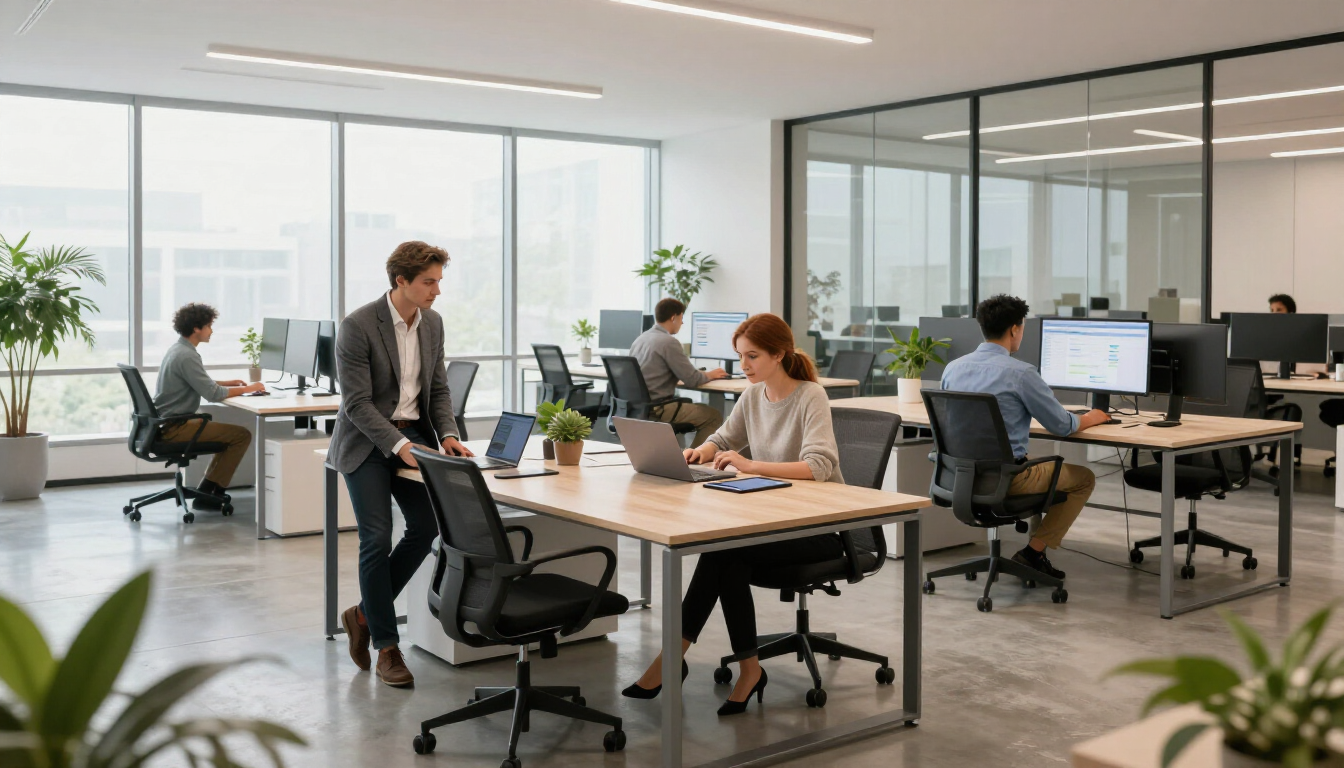
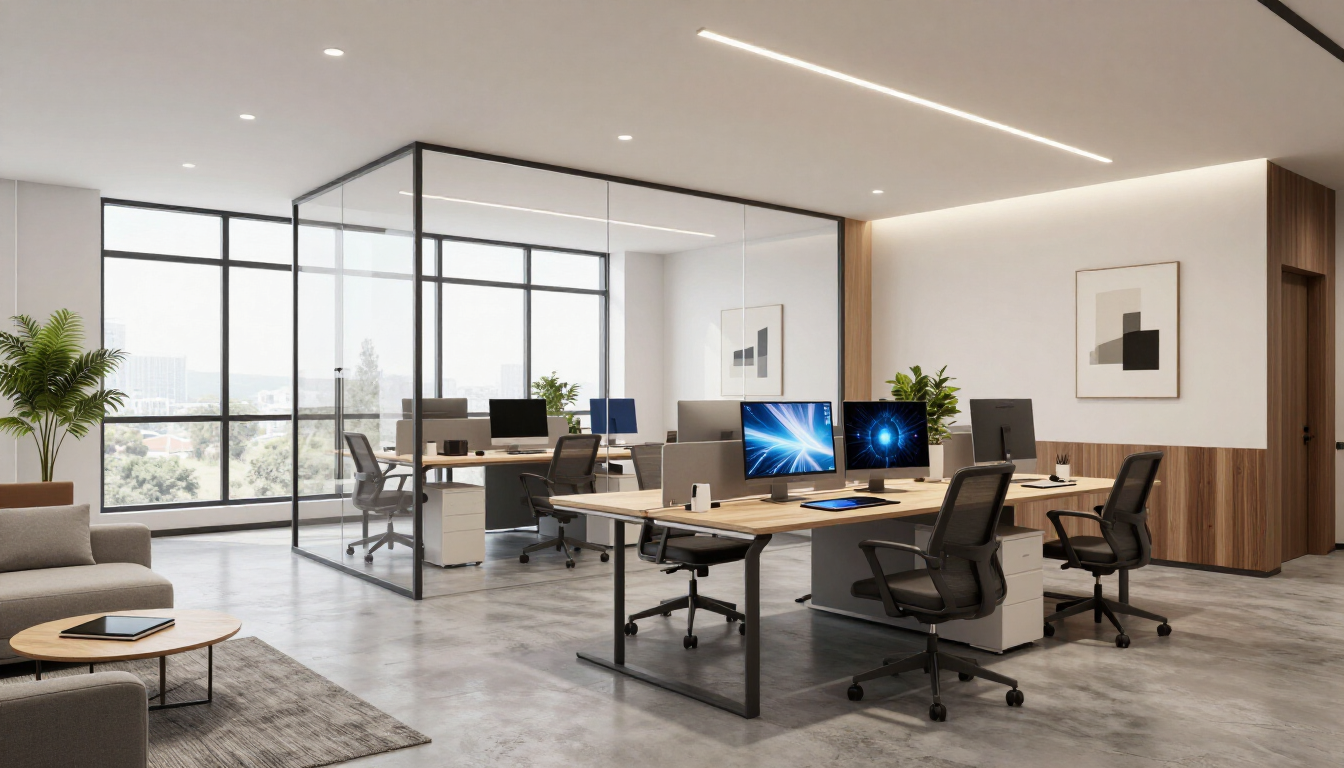
Modern Office Refurbishment Ideas for Hybrid Workspaces
Flexible Desk Neighbourhoods
Instead of assigning every employee a permanent desk, many hybrid offices use team-based neighbourhoods. This allows departments to sit together when they are in the office while reducing wasted desk space on quieter days.
Bookable Meeting Rooms
Hybrid teams need reliable meeting space for both in-person and remote participants. Refurbishment can create rooms with screens, cameras, acoustic treatment and practical layouts for video collaboration.
Quiet Focus Areas
Open-plan offices can be distracting. Quiet areas, focus rooms and acoustic booths help staff complete concentrated work when they are in the office, especially if home working is not always suitable.
Collaboration Zones
Hybrid offices should make teamwork easier. Informal project spaces, writable walls, flexible seating and shared worktables can support brainstorming, training and team catch-ups.
Breakout and Social Areas
When people travel into the office, connection matters. Comfortable breakout spaces encourage informal conversations, team culture and staff engagement without requiring formal meeting rooms.
Smart Storage Solutions
Hybrid work often reduces fixed desks, which means staff need secure lockers, shared storage, charging points and places to keep personal or work equipment during office days.
Hybrid Office Layout Ideas by Workplace Need
Hybrid workspaces need to support different activities throughout the week. A good refurbishment should begin by identifying how the office is actually used, then designing zones around those patterns rather than simply replacing old furniture with new furniture.
| Workplace Need | Refurbishment Idea | Why It Helps |
|---|---|---|
| Focused work | Quiet rooms, acoustic booths, smaller focus areas and improved desk spacing. | Allows staff to complete deep work without constant interruption from calls, conversations or movement. |
| Team collaboration | Project tables, flexible furniture, writable surfaces and informal meeting areas. | Encourages people to use office days for teamwork, planning, training and creative problem-solving. |
| Hybrid meetings | Video-enabled meeting rooms with screens, cameras, microphones and acoustic treatment. | Improves communication between office-based staff and remote colleagues, clients or suppliers. |
| Staff wellbeing | Breakout areas, natural light, planting, better ventilation, rest spaces and improved kitchens. | Creates a more comfortable workplace and can support morale, retention and employee satisfaction. |
| Flexible attendance | Hot desking, team zones, lockers, booking systems and adaptable furniture. | Helps the office cope with changing occupancy across different days of the week. |
| Client impression | Reception upgrades, branded meeting rooms, better lighting and professional finishes. | Improves the way visitors, clients and candidates perceive the business. |
Design Features That Matter in a Hybrid Office
Acoustic Control
Noise is one of the biggest complaints in modern offices. Hybrid workplaces often involve more video calls, informal meetings and changing occupancy levels, which can make sound control more difficult. Refurbishment can improve this through acoustic panels, meeting pods, soft furnishings, ceiling treatments, carpets, partitions and better zoning.
Lighting Upgrades
Good lighting affects comfort, concentration and the overall feel of the office. Older fluorescent lighting can make a workplace feel tired and harsh. LED lighting, task lighting, feature lighting and better use of natural light can transform the space while supporting energy efficiency.
Technology-Ready Rooms
Hybrid meetings fail when rooms are poorly equipped. Businesses should consider screens, cameras, microphones, power access, cable management, room booking systems and suitable furniture so both remote and in-person attendees can participate properly.
Flexible Furniture
Static layouts are less useful in hybrid environments. Modular desks, movable tables, mobile storage, stackable seating and adaptable meeting furniture allow the office to respond to changing team needs without major works every few years.
Biophilic Design
Natural materials, planting, warmer finishes and improved daylight can make the workplace feel calmer and more inviting. Biophilic design is not just about adding plants; it is about making the space feel less sterile and more human.
Better Staff Facilities
Staff are more likely to value office days when facilities are comfortable. Kitchens, breakout rooms, lockers, showers, changing areas, wellbeing spaces and informal seating can all improve the office experience.
How to Plan an Office Refurbishment for Hybrid Working
Before choosing colours, furniture or finishes, businesses should start with how the office is used. A hybrid workspace should be based on real working patterns rather than assumptions. This means understanding when people come in, why they come in, what spaces are overused, what spaces are underused and what problems staff experience during office days.
For example, a business may discover that individual desks are empty for much of the week, but meeting rooms are constantly booked. Another may find that staff come in for collaboration but struggle to find quiet areas for calls. A third may need fewer desks but better client-facing meeting spaces. These insights should shape the refurbishment brief.
A practical hybrid refurbishment should consider:
Desk demand: How many people are in the office on peak days, not just average days?
Meeting room pressure: Are rooms always fully booked, too large, too small or poorly equipped?
Noise levels: Do staff have enough quiet areas for calls and focused work?
Technology: Can remote workers join meetings properly without poor sound or awkward layouts?
Staff experience: Does the office give people a reason to choose office days?
Future flexibility: Can the layout adapt if attendance patterns change again?
The best hybrid office refurbishments are not necessarily the most expensive. They are the ones that solve the right problems. A carefully planned refurbishment can improve the employee experience, support productivity and make better use of existing space without unnecessary overdesign.
Common Mistakes to Avoid When Refurbishing for Hybrid Work
Removing Too Many Desks
Hybrid working does not mean nobody comes into the office. Peak days can still be busy. Removing too many desks can create frustration if staff cannot find suitable places to work.
Ignoring Acoustic Problems
More video calls and collaboration can make offices noisier. Without acoustic planning, a modern-looking office can quickly become uncomfortable and distracting.
Underestimating Meeting Demand
Hybrid teams often need more, not fewer, meeting spaces. Small video rooms, focus pods and flexible meeting areas can be more useful than one large boardroom.
Forgetting Storage
When staff no longer have permanent desks, they still need places for bags, laptops, documents, chargers and personal items. Lockers and shared storage are essential.
Prioritising Looks Over Use
A stylish office is not enough. The layout must support the way people work. Poorly planned furniture, lighting or circulation can make the space difficult to use.
Not Planning for Change
Hybrid patterns are still evolving. A refurbishment should include flexibility so the business can adjust layouts without another major project too soon.
How Hybrid Office Refurbishment Can Benefit Businesses
A well-planned hybrid office refurbishment can support more than day-to-day comfort. It can influence recruitment, retention, productivity, collaboration and the way clients perceive the business. When staff have flexibility, the office needs to become a place that adds value rather than simply a location they are expected to attend.
Improved Employee Experience
Comfortable spaces, better lighting, quiet areas, collaboration zones and improved facilities can make office days more worthwhile. This can support morale and help staff feel that the workplace has been designed around their needs.
Better Use of Space
Hybrid working can leave some areas underused while others are in high demand. Refurbishment allows businesses to rebalance the space by reducing wasted areas and investing in the zones people actually need.
Stronger Client Impression
Reception areas, meeting rooms and client-facing spaces can say a lot about a business. A modern office can help create confidence, professionalism and trust during visits, interviews and meetings.
Greater Long-Term Flexibility
Flexible layouts, modular furniture and adaptable rooms help businesses respond to growth, team changes and evolving working patterns without needing a full redesign each time.
Frequently Asked Questions
What is a hybrid workspace?
Short answer: A hybrid workspace is an office designed to support people who split their working time between the office, home and other locations.
A hybrid workspace is different from a traditional office because it is not built around the assumption that every employee needs the same fixed desk every day. Instead, it provides different types of spaces for different kinds of work. These may include flexible desk areas, collaboration zones, quiet rooms, video-call booths, meeting rooms, social spaces, breakout areas, lockers and shared technology.
The main purpose of a hybrid workspace is to make office time more valuable. If staff only attend the office on certain days, the office needs to support the activities that are hardest to achieve remotely. This often includes team meetings, training, mentoring, creative collaboration, client meetings and relationship-building. At the same time, the office still needs to support focused individual work because not everyone has a suitable home working environment.
From a refurbishment perspective, hybrid working changes the way space is planned. Businesses may need fewer permanent desks, but more varied settings. For example, a company might reduce rows of fixed workstations and introduce a mix of team tables, small meeting rooms, acoustic pods and comfortable breakout areas. The key is balance. A good hybrid workspace should not feel like a half-empty traditional office or a noisy social lounge. It should be practical, flexible and designed around real working patterns.
For many businesses, creating a hybrid workspace through refurbishment is more cost-effective than relocation. It allows the organisation to adapt its existing premises to modern working expectations while improving staff experience, operational efficiency and long-term workplace flexibility.
What are the best office refurbishment ideas for hybrid working?
Short answer: The best office refurbishment ideas for hybrid working include flexible desk zones, video-enabled meeting rooms, quiet focus areas, acoustic pods, collaboration spaces, breakout areas, smart storage and improved staff facilities.
The most effective ideas are the ones that solve real workplace problems. For example, if staff come into the office mainly for meetings, the refurbishment should prioritise meeting room quality, technology, acoustics and booking systems. If the office is too noisy, acoustic treatment, quiet rooms and better zoning may be more important than cosmetic upgrades. If staff struggle to find space on busy days, a better desk strategy and flexible layout may be needed.
Flexible desk zones are one of the most common hybrid office improvements. Instead of permanent desks for every employee, teams may use shared neighbourhoods with enough capacity for peak office days. This can free up space for collaboration areas, breakout zones and smaller meeting rooms. However, businesses should be careful not to remove too many desks without understanding actual attendance patterns.
Video-enabled meeting rooms are also essential. Hybrid meetings can be frustrating when sound is poor, cameras are badly positioned or remote workers feel excluded. Refurbishment can improve this with better screens, microphones, lighting, furniture layouts and acoustic control.
Other useful ideas include lockers for staff without fixed desks, improved kitchens and social spaces, biophilic design, better lighting, upgraded ventilation, informal project areas and comfortable reception spaces. The best hybrid refurbishment is not just a design trend; it is a workplace strategy. It should help people work better, communicate more easily and feel that the office is worth using.
How can office refurbishment improve staff wellbeing?
Short answer: Office refurbishment can improve staff wellbeing by creating a more comfortable, flexible and supportive environment with better lighting, ventilation, acoustics, breakout areas, quiet spaces and staff facilities.
Wellbeing is now a major consideration in workplace design. A poorly designed office can contribute to stress, distraction, discomfort and low morale. Common issues include harsh lighting, poor air quality, noise, lack of privacy, uncomfortable furniture, limited natural light and inadequate break areas. Refurbishment gives businesses the opportunity to address these problems properly.
Lighting is one of the most important areas. Upgrading old fluorescent fittings to better LED lighting can make the office feel brighter, cleaner and more comfortable. Where possible, layouts should make better use of natural light, especially for workstations and shared areas. Ventilation and temperature control also matter because uncomfortable environments can affect concentration and productivity.
Acoustics are another major wellbeing issue in hybrid offices. More calls and meetings can create constant background noise, especially in open-plan spaces. Acoustic panels, soft flooring, meeting pods, phone booths and better zoning can make the office feel calmer and easier to use.
Breakout spaces and informal seating also support wellbeing by giving staff somewhere to pause, eat, talk or step away from their desks. For some businesses, refurbishment may also include showers, changing areas, lockers, prayer rooms, wellness rooms or improved kitchens. These facilities can make the office more inclusive and practical for different working patterns.
A wellbeing-focused refurbishment does not need to be extravagant. Small changes, when planned properly, can make a significant difference to how people feel in the workplace. The goal is to create an office that supports people, rather than simply housing them.
How much space does a hybrid office need?
Short answer: A hybrid office may need less desk space than a traditional office, but it often needs more varied space for meetings, collaboration, focus work, storage and staff wellbeing.
There is no single rule for how much space a hybrid office needs because every business has different attendance patterns and working styles. Some organisations have busy midweek office days and quiet Mondays or Fridays. Others have teams that rotate by department. Some businesses need frequent client meetings, while others need more quiet technical or administrative work. The right amount of space depends on how the office is used, not just how many people are employed.
A common mistake is assuming that hybrid working automatically means a business can cut office space dramatically. While fewer people may be present every day, the space still needs to function properly on peak days. If too many desks are removed, staff can become frustrated when they cannot find somewhere suitable to work. Similarly, if meeting rooms are reduced too much, people may struggle to collaborate when they do come in.
A better approach is to assess occupancy patterns, desk usage, meeting room demand and staff feedback before finalising the refurbishment layout. Businesses may find they can reduce fixed workstations but need more small meeting rooms, video-call booths, breakout areas and flexible project zones.
Hybrid offices also need storage. Staff without assigned desks still need places for bags, laptops, documents and personal items. Lockers, shared storage and charging points can make the workplace more practical. The ideal hybrid office is not necessarily smaller; it is better balanced. It uses space in a way that reflects modern working habits rather than old assumptions.
Should a hybrid office have hot desks?
Short answer: Hot desks can work well in a hybrid office, but only if they are supported by good planning, storage, booking systems, clear team zones and enough capacity for peak attendance days.
Hot desking is often seen as a simple solution for hybrid work, but it can cause problems if introduced without proper thought. Staff may feel unsettled if they never know where they will sit, especially if they need specific equipment, privacy or access to colleagues. A badly planned hot desk system can make the office feel chaotic rather than flexible.
A better approach is often to create team neighbourhoods rather than completely unstructured hot desking. This means different teams have flexible areas where they can sit together when in the office, while still avoiding fixed desks for every person. This supports collaboration and makes the workplace easier to navigate.
Storage is essential. If staff no longer have personal desks, they need lockers or secure storage for belongings and equipment. Power access, monitor availability, docking stations and ergonomic furniture should also be considered. A desk booking system may help larger offices manage attendance, although smaller workplaces may be able to operate with simpler arrangements.
Hot desks should also be balanced with other types of space. Staff may need quiet rooms, call booths, meeting rooms and breakout spaces, not just shared desks. The goal of a hybrid refurbishment should be to create choice. Some people need a desk for focused work, others need a room for calls, and others need collaborative space. Hot desking can be part of the answer, but it should not be the whole strategy.
How can a business make an office more attractive to staff?
Short answer: A business can make an office more attractive by improving comfort, layout, technology, lighting, acoustics, social spaces, meeting rooms and the overall employee experience.
In a hybrid working environment, staff are more likely to question the value of travelling into the office. If the office is uncomfortable, noisy, poorly equipped or uninspiring, people may see it as a disruption rather than a benefit. Refurbishment can help by creating a workplace that supports the reasons people come in: collaboration, connection, productivity, learning and access to better facilities.
Comfort is a major factor. Good chairs, suitable desks, better lighting, improved air quality and effective temperature control can make a noticeable difference. Noise control also matters, especially where people need to make calls or concentrate. Acoustic pods, quiet rooms and better zoning can make the office easier to use.
Technology should be reliable and easy. Staff should not waste time trying to connect to screens, find charging points or join hybrid meetings with poor sound. Meeting rooms should be designed for both in-person and remote participants, with suitable cameras, microphones, screens and layouts.
Social and breakout spaces can also make the office more appealing. People often come in to connect with colleagues, so kitchens, informal seating, project spaces and relaxed meeting areas can help create a stronger workplace culture. Reception areas and client-facing rooms also influence how staff feel about the business and how visitors perceive it.
The most attractive offices are not necessarily the most expensive. They are thoughtful, practical and easy to use. A well-designed refurbishment shows staff that the workplace has been adapted around modern needs rather than simply expecting people to return to an outdated environment.
Creating a Workplace People Want to Use
Modern office refurbishment is no longer just about improving appearance. For hybrid workspaces, the office must earn its place in the working week. It needs to support collaboration, focus, meetings, wellbeing, flexibility and business identity.
By investing in better layouts, acoustic solutions, technology-ready rooms, breakout areas, lighting, storage and staff facilities, businesses can turn underused or outdated offices into spaces that actively support the way people work in 2026.
The strongest hybrid workspaces are practical, flexible and human. They do not follow trends blindly. They are designed around how teams communicate, concentrate, meet, learn and grow.