
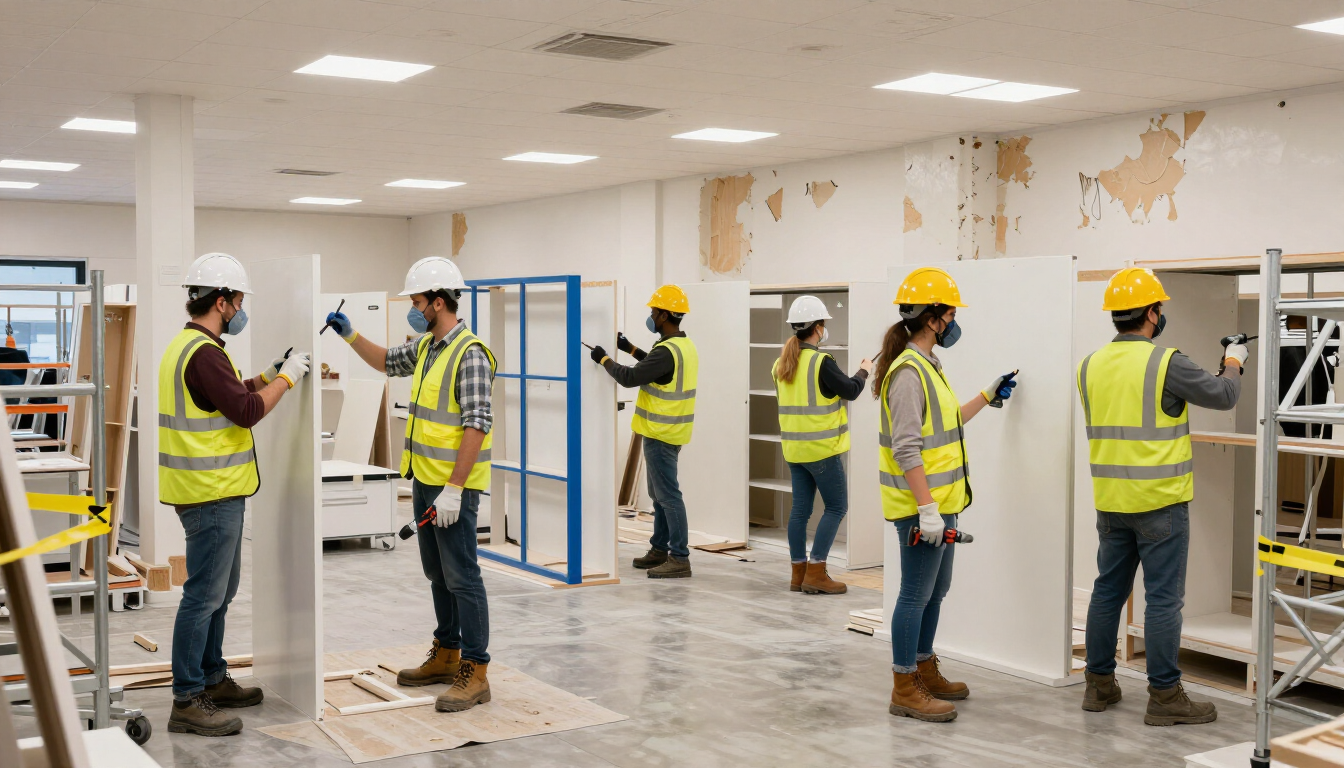

Commercial Soft Strip Out Contractors Manchester
Professional Soft Strip Out Contractors Manchester
Group Services North West provides commercial soft strip out and internal demolition services across Manchester for offices, retail units, landlords, developers and refurbishment projects. We help prepare buildings safely and efficiently before refurbishment, fit-out, lease-end handover or wider demolition works.
Commercial Soft Strip Out Specialists in Manchester
Soft strip out work is often the first major step before a commercial refurbishment, office fit-out, retail upgrade, dilapidation project or internal demolition scheme. It involves the careful removal of non-structural elements from a building so the space can be prepared for the next stage of work.
Group Services North West supports Manchester businesses, landlords, contractors and property teams with practical soft strip out services for commercial spaces. This can include the removal of partitions, ceilings, flooring, fixtures, fittings, redundant services, joinery, furniture, counters, kitchens, sanitaryware, display units and internal finishes.
Our focus is on commercial and larger-scale projects where planning, access, safety, sequencing and waste handling matter. Whether the work is taking place in a city-centre office, a retail unit, a landlord-managed commercial space, an industrial office area or a building being prepared for refurbishment, we provide a structured approach from planning through to site clearance.
Quick Answer: What Is a Soft Strip Out?
A soft strip out is the removal of non-structural internal elements from a building before refurbishment, fit-out, demolition or handover.
In a Manchester commercial property, this may include removing partition walls, suspended ceilings, flooring, doors, skirting, fixtures, fittings, kitchens, toilets, counters, furniture, shelving, signage, redundant cabling and other internal finishes.
Soft strip out work is different from structural demolition. The aim is usually to clear the space safely while leaving the main structure intact, ready for refurbishment, new fit-out works, landlord approval, lease-end reinstatement or further construction activity.
Soft Strip Out Services We Can Support
Commercial strip-out work needs to be planned around the property, the future use of the space and the wider project programme. Some projects require a full internal clearance, while others need a phased strip-out to keep parts of the building operational.
Office Strip-Out
Removal of partitions, workstations, meeting rooms, flooring, ceilings, furniture, kitchens, storage, fixtures and redundant internal finishes before refurbishment or fit-out.
Retail Strip-Out
Clearing shop floors, counters, display units, shelving, changing rooms, signage, flooring, lighting features and back-of-house areas for new tenants or refurbishment.
Internal Demolition
Careful removal of non-structural internal elements such as partition walls, suspended ceilings, built-in joinery, internal fixtures and redundant layouts.
Landlord Handover Works
Strip-out and clearance support for landlords, tenants and managing agents where premises need to be returned, prepared or improved between occupations.
Dilapidation Strip-Out
Removal of tenant alterations, fixtures, partitions, flooring and other fit-out elements as part of lease-end reinstatement or dilapidation-related works.
Waste Segregation
Responsible handling, sorting and removal of strip-out waste to keep the site clear and support the next stage of commercial refurbishment or demolition.
Commercial Strip-Out for Manchester Offices
Manchester has a wide range of office environments, from city-centre commercial buildings and professional suites to converted spaces, business parks and landlord-managed floors. When these offices need to be refurbished, re-let or handed back at the end of a lease, soft strip out work is often required before the next phase can begin.
Office strip-out can involve removing existing partitions, ceiling tiles, flooring, lighting features, reception counters, kitchens, storage, furniture, glazing, meeting rooms and redundant fixtures. In some cases, the aim is to return the office to a clean, open layout. In others, the work prepares the space for a new Cat B fit-out, office refurbishment or tenant-specific design.
Preparing office spaces for new layouts, meeting rooms, breakout areas, flooring, ceilings, decoration and fit-out works.
Removing tenant-installed partitions, fixtures, finishes and alterations where the lease requires the space to be handed back in a certain condition.
Removing previous tenant fit-out elements so the space can be adapted for a new business, layout or workplace requirement.
Managing access, noise, dust, waste and working hours carefully where the building remains partly occupied by other tenants or staff.
Retail, Hospitality and Commercial Unit Strip-Out
Retail and hospitality premises often need to be stripped out quickly and carefully between tenants, before refurbishment or ahead of a new fit-out. These projects may involve customer-facing finishes, counters, shelving, wall linings, display units, signage, flooring, lighting features, back-of-house fittings, kitchens, changing rooms or service areas.
Manchester retail and hospitality strip-out projects can be time-sensitive, especially when lease dates, opening schedules or landlord handover deadlines are involved. A structured approach helps clear the space properly while keeping waste, access, neighbouring businesses and building management requirements under control.
| Property Type | Typical Strip-Out Works | Project Considerations |
|---|---|---|
| Retail Units | Removal of display units, counters, shelving, signage, flooring, lighting features and back-of-house fixtures. | Often needs to be completed around landlord requirements, shopping area access and future fit-out plans. |
| Hospitality Spaces | Strip-out of counters, seating, flooring, fixtures, kitchens, service areas, toilets and internal finishes. | May require careful planning around services, waste, hygiene-related materials and building access. |
| Commercial Units | General clearance of non-structural internals, redundant fittings, ceilings, floors, partitions and previous tenant alterations. | Useful before refurbishment, re-letting, conversion or new occupier fit-out works. |
| Mixed-Use Buildings | Internal strip-out in offices, retail areas, service areas, common spaces or landlord-controlled areas. | Needs coordination with other occupiers, access restrictions, shared routes and safety planning. |
Soft Strip Out Before Commercial Refurbishment
A successful refurbishment often depends on how well the space is prepared before the main works begin. If old partitions, flooring, redundant services, damaged fittings or previous tenant installations are not removed properly, they can delay the refurbishment programme and create avoidable complications for following trades.
Soft strip out helps create a clean starting point. It allows surveyors, designers, contractors and clients to see the condition of the building more clearly and plan the next stage with fewer assumptions. This can be especially useful in older Manchester properties, previously altered offices, retail units with heavy fixtures or commercial spaces that have changed use over time.
Soft strip out is often required before:
Office refurbishment, Cat B fit-out, retail fit-out, landlord handover, dilapidation works, internal demolition, building surveys, asbestos checks, M&E upgrades, flooring replacement, ceiling replacement and wider commercial refurbishment projects.
How We Plan Commercial Strip-Out Projects
Commercial strip-out work needs more than labour on site. It needs planning, sequencing, access control, waste handling and clear communication. This is particularly important in busy Manchester locations, multi-tenant buildings, occupied premises or sites with restricted access.
| Stage | What We Consider | Why It Matters |
|---|---|---|
| Site Review | Building layout, access routes, parking, loading, lifts, staircases, working hours and existing conditions. | Helps identify constraints before the strip-out team arrives on site. |
| Scope Confirmation | What needs to be removed, what must remain, landlord requirements and the next stage of works. | Reduces confusion and prevents items being removed or retained incorrectly. |
| Safety Planning | Risk assessments, method statements, segregation, access control, dust, noise, waste and emergency routes. | Supports safer working and better coordination with building users or other trades. |
| Strip-Out Works | Removal of agreed non-structural elements in a controlled sequence. | Keeps the project organised and helps prepare the space for refurbishment or handover. |
| Waste Removal | Sorting, loading, clearing and responsible removal of strip-out materials from site. | Maintains a safer, cleaner workspace and supports efficient progress. |
| Final Clearance | Final walk-through, removal of agreed materials and preparation for the next contractor or client stage. | Provides a clear handover point before refurbishment, fit-out or further works begin. |
Safe Internal Demolition and Site Clearance
Internal demolition should be approached carefully, particularly in commercial buildings where other occupiers, shared access routes, fire exits, live services or building management rules may need to be considered. Soft strip and internal demolition works should be planned so that the site remains controlled and the next phase of work can begin safely.
Risk Assessments and Method Statements
Commercial strip-out projects may require clear RAMS before work starts, especially where landlords, managing agents, principal contractors or site teams need to approve the works.
Access and Segregation
Work areas, waste routes, lifts, staircases, loading areas and shared spaces should be controlled to reduce disruption and protect staff, tenants, visitors and other trades.
Dust, Noise and Disruption Control
Where work takes place in or near occupied buildings, dust, noise, vibration and working hours should be considered as part of the project plan.
Clear Handover
Once strip-out is complete, the space should be cleared and left ready for the next stage, whether that is refurbishment, fit-out, survey, inspection or landlord handover.
Manchester Areas We Cover
We support commercial soft strip out and internal demolition projects across Manchester and surrounding areas. The focus is on suitable commercial opportunities, including larger strip-out, refurbishment preparation, landlord works and internal demolition projects.
Manchester City Centre
Office strip-out, commercial refurbishment preparation, landlord handover works and internal demolition in central commercial buildings.
Spinningfields & Deansgate
Commercial strip-out support for professional offices, client-facing spaces and multi-tenant buildings.
Salford Quays & MediaCity
Soft strip and office clearance support for commercial spaces, creative workplaces and refurbishment projects.
Trafford Park
Industrial office strip-out, warehouse office clearance, welfare area strip-out and commercial unit preparation.
South Manchester
Support for office, retail, hospitality and commercial unit strip-out projects in and around South Manchester.
Greater Manchester
Commercial soft strip out and internal demolition support for suitable larger projects across the wider Manchester area.
Related Commercial Property Services
Soft strip out often forms part of a wider commercial property project. These related services may also be useful:
Commercial Refurbishment Services — for office, retail, hospitality, healthcare and industrial refurbishment projects across the North West.
Commercial Refurbishment Checklist — useful for planning surveys, access, safety, budgets, approvals and handover.
Office Refurbishment Manchester — for businesses planning workspace upgrades, commercial fit-outs or occupied office refurbishment.
Dilapidation Services — for lease-end repairs, reinstatement and landlord handover requirements.
Frequently Asked Questions
What does a soft strip out contractor do?
Short answer: A soft strip out contractor removes non-structural internal elements from a building before refurbishment, fit-out, demolition, lease-end handover or reoccupation.
In a commercial property, soft strip out work can include the removal of partitions, suspended ceilings, flooring, doors, skirting, fixtures, fittings, kitchens, toilets, counters, shelving, signage, display units, redundant furniture and internal finishes. The aim is to clear the space safely without removing the main structure of the building unless structural demolition has been separately specified and approved.
For Manchester offices, shops, hospitality premises and commercial units, soft strip out is often needed when a tenant leaves, a new refurbishment is planned, or a landlord wants to prepare a unit for re-letting. It can also form part of dilapidation works where tenant-installed alterations need to be removed before the property is handed back.
A good soft strip contractor should plan the work properly, not simply remove items at random. The contractor needs to understand what must be stripped out, what must remain, how waste will leave the building, whether other occupiers are present, and whether work needs to be phased or completed outside normal hours. This planning helps reduce disruption and prepares the building for the next stage of work.
Is soft strip out the same as demolition?
Short answer: Soft strip out is a type of internal removal work, but it is not the same as full structural demolition. Soft strip focuses on non-structural elements inside a building.
Demolition can involve removing all or part of a structure, including walls, floors, roofs or major building elements. Soft strip out is usually carried out before refurbishment, fit-out or demolition and focuses on internal fixtures, finishes and non-structural components. This can include ceilings, flooring, partitions, doors, kitchens, toilets, joinery, shelving, counters and other installed items.
In many commercial projects, soft strip out comes before heavier demolition or refurbishment work. It clears the building so surveyors, contractors and project teams can access the space properly. It can also reveal hidden building conditions, redundant services or repair issues that need to be addressed before the next phase begins.
The distinction matters because soft strip out usually requires a different approach from structural demolition. It often takes place in buildings that are staying in use, being prepared for a new tenant, or being refurbished rather than demolished completely. Access, noise, dust, waste removal and protection of retained areas are therefore very important.
For Manchester commercial properties, soft strip out is commonly used for offices, shops, hospitality units, landlord spaces and refurbishment projects where the main building structure remains but the interior needs to be cleared or adapted.
What types of Manchester properties need soft strip out work?
Short answer: Soft strip out work is commonly needed in Manchester offices, retail units, hospitality premises, industrial offices, commercial units, landlord-managed properties and buildings being prepared for refurbishment or re-letting.
Office properties often need soft strip out when a tenant leaves, when a business changes layout, or when the space is being refurbished for a new occupier. This may involve removing old meeting rooms, partitions, flooring, furniture, kitchens, storage, suspended ceilings or previous tenant fit-out elements.
Retail units may need strip-out work between tenants or before a new shop fit-out. Retail strip-out can involve removing counters, shelving, displays, changing rooms, signage, flooring, lighting features and back-of-house fittings. Hospitality spaces may require removal of seating, counters, bar areas, kitchen-related fixtures, toilets, flooring and customer-facing finishes before refurbishment.
Industrial and warehouse sites may need strip-out work in office pods, staff welfare areas, internal rooms, storage zones or operational spaces. Landlords and managing agents may also need commercial units stripped back so they can be inspected, repaired, re-let or prepared for a new occupier.
The common factor is that the space needs to be cleared safely and efficiently before the next stage. That next stage could be refurbishment, Cat B fit-out, internal demolition, lease-end reinstatement, survey work or landlord handover.
Can soft strip out work be carried out in an occupied commercial building?
Short answer: Yes, soft strip out work can often be carried out in occupied or partially occupied commercial buildings, but it needs careful planning around access, noise, dust, safety and working hours.
Many Manchester commercial buildings have multiple occupiers, shared entrances, lifts, staircases, corridors and building management rules. Strip-out work in these environments needs to be planned so that staff, tenants, visitors and other contractors can continue using the building safely where required.
This may involve separating the work area from occupied areas, agreeing waste routes, protecting lifts or stairs, scheduling noisy work outside normal hours and keeping fire routes clear. Dust control, temporary signage, site housekeeping and clear communication are also important.
In some cases, soft strip out can be phased. For example, one floor, department or area may be cleared while another remains in use. This can help businesses continue operating while the refurbishment or handover process begins. However, not every project is suitable for live working. If the work is too disruptive, affects essential services or creates unavoidable safety issues, temporary closure or wider segregation may be required.
The safest approach is to assess the building, the scope and the level of occupation before the project starts. This allows the contractor, client, landlord or managing agent to agree a realistic plan that controls disruption and protects everyone using the building.
How long does a commercial soft strip out take?
Short answer: The length of a commercial soft strip out depends on the size of the space, the amount of material to remove, access restrictions, waste arrangements and whether the building is occupied.
A small office or retail unit with limited fixtures may be stripped out relatively quickly. A larger commercial floor, multi-area office, hospitality venue, industrial office space or heavily fitted retail unit will usually take longer. The programme can also be affected by how easy it is to move materials out of the building, whether lifts are available, whether waste skips can be positioned nearby and whether work must be completed outside normal business hours.
Manchester city-centre projects may need additional logistics planning. Parking restrictions, loading bay rules, building management requirements, neighbouring tenants and lift access can all influence how quickly work can be completed. In multi-tenant buildings, it may also be necessary to limit noisy or disruptive work to agreed times.
The timeline should also include planning before work starts. The contractor needs to understand the scope, confirm what is being removed, plan waste routes, assess access, consider safety requirements and coordinate with the client or building manager. Rushing this stage can lead to delays once the project is underway.
The best way to get a realistic timescale is to review the site and agree the scope clearly. Once the size, access, waste volume and project restrictions are understood, a more accurate programme can be prepared.
Do soft strip contractors remove waste from site?
Short answer: Yes, soft strip out projects usually include waste removal, but the exact arrangements should be agreed before work starts.
Soft strip out can generate a large amount of waste, including timber, plasterboard, ceiling tiles, flooring, metals, fixtures, fittings, furniture, packaging, joinery, doors, counters and general mixed construction waste. If waste is not managed properly, it can block access routes, slow the project down and create safety concerns for workers or building users.
A clear waste plan should identify how materials will be removed, where they will be stored temporarily, whether skips or waste vehicles are required, and how access routes will be kept clear. In busy Manchester locations, this can be particularly important because parking, loading and building access may be restricted.
Waste segregation may also be useful, especially on larger projects where different material types can be separated. This can make site management more organised and support responsible disposal. Where the strip-out forms part of a wider refurbishment or demolition programme, keeping the site clear also helps following trades start work more efficiently.
Clients should always check what is included in the quotation. Some projects include full strip-out and waste removal, while others may separate certain specialist waste items, hazardous materials or landlord-specific requirements. Clear agreement at the start avoids confusion later.
Plan Your Manchester Soft Strip Project Properly
A successful commercial soft strip out depends on clear planning, safe working, controlled access and responsible waste removal. Whether the project involves an office, retail unit, hospitality premises, commercial building or landlord handover, the space needs to be prepared properly for the next stage.
Group Services North West provides commercial soft strip out and internal demolition support for suitable projects across Manchester and Greater Manchester.
Get Quote